欧盟各国首都正在权衡是否对美国征收价值930亿欧元的关税,或限制美国企业进入单一市场,以回应唐纳德·特朗普对反对其格陵兰岛计划的北约盟国的威胁。
局势升级粉碎了欧洲残存的任何幻想,即其绥靖美国总统的策略正在奏效。吉迪恩·拉赫曼指出,“答案是,为了避免最糟糕的后果,欧洲领导人现在必须反击。”
今天,我将为您带来这场紧张的危机外交的最新进展,我们的法兰克福记者也将探讨欧洲应如何帮助其企业抵御美国的经济胁迫。
三天前,欧盟领导人还在准备本周在达沃斯说服特朗普承诺向战后乌克兰提供安全保障。而今天,他们醒来后却开始怀疑是否还能相信特朗普对他们的承诺。
周六晚间,特朗普誓言要对六个欧盟国家以及北约盟国挪威和英国加征10%的关税,以惩罚他们反对他吞并格陵兰岛的企图。
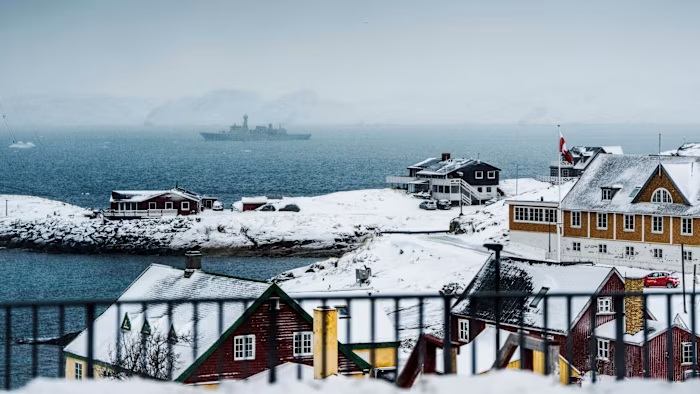
围绕特朗普想要“拥有”丹麦控制的北极岛屿格陵兰岛的争议,已从双边争端演变为数十年来对北约联盟的最大威胁,也是自苏伊士运河危机以来跨大西洋关系最严重的裂痕。
欧盟领导人及其代表团将于今日在达沃斯世界经济论坛上与特朗普和美国官员会面。他们正在撕毁此前准备的乌克兰局势简报,转而采用一位欧盟高级外交官所说的“胡萝卜加大棒”策略——即布鲁塞尔将如何反制关税,以及缓和局势的提议。
这位外交官补充道:“你怎么能和这个人坐下来讨论他对乌克兰的安全保证呢?除非你放弃现实,否则你根本无法信任他。”
欧盟领导人将于本周晚些时候召开紧急峰会,暂定于周四在达沃斯与特朗普会晤之后举行。
为筹备此次峰会,欧盟大使昨晚讨论了对美国征收去年已拟定的价值930亿欧元关税的可能性,或动用所谓的“反胁迫工具”限制美国公司进入欧盟单一市场。
据知情官员透露,许多与会者表示支持将报复性措施作为谈判筹码,但认为在外交努力结束之前不应贸然采取行动。
预计本周事态将持续发展。今天在达沃斯举行的西方国家安全顾问会议最初是为了讨论乌克兰问题,现在将重点放在格陵兰问题上。今天在布鲁塞尔举行的欧元区财长会议也将讨论这场危机;法国和德国的财长将于今天上午在柏林举行会晤,进行协调。此外,欧洲理事会主席安东尼奥·科斯塔呼吁召开欧盟领导人特别峰会,定于周四在布鲁塞尔举行。
一些乐观人士声称,特朗普此前也曾发出过空洞的威胁,过去一年来,欧洲也经历过类似的时刻,最终都找到了应对之策。
意大利总理乔治娅·梅洛尼昨天与特朗普通话后表示,她“有兴趣听取”可能的妥协方案。
另一位欧盟外交官表示:“在达沃斯论坛结束之前,请各位先不要急于行动。”
马丁·沃尔夫写道,在重商主义复兴的背景下,自由贸易政策正逐渐被可能导致全面冲突的摩擦所取代。
葡萄牙前央行行长马里奥·森特诺告诉奥拉夫·斯托贝克,法兰克福和布鲁塞尔的欧盟决策者应该帮助欧盟企业适应特朗普“将关税武器化”的做法。
森特诺是六位角逐欧洲央行下一任副行长的候选人之一,他将接替路易斯·德·金多斯,后者八年的任期将于五月到期。
欧元区21个财长今天举行会议,可能已经决定谁将担任欧洲央行第二重要的职位。
葡萄牙候选人森特诺在接受《金融时报》采访时警告说,美国现有的和潜在的新关税对面临“(在美国)价格劣势”的欧洲企业来说是一次“结构性冲击”。
他表示,面对特朗普本周末提出的新关税威胁,欧洲应该“协调货币、财政和竞争政策”。
森特诺说,企业必须通过提高“竞争力”来应对这种深层次的冲击,欧洲政策制定者应该“支持这种转型,尤其是在关税武器化成为博弈手段的当下”。
“如果没有关税,情况会好得多,”他说,并称关税是“一大挑战”。
但森特诺也表示,随着时间的推移,在欧洲市场(包括美国市场)竞争的欧洲公司可能会变得“效率更高、竞争力更强:这有点自相矛盾”。
Good morning. EU capitals are weighing up imposing €93bn worth of tariffs on the US or curbing American companies’ access to the single market, in response to Donald Trump’s threats against Nato allies that oppose his designs on Greenland.
The escalation has shattered any of Europe’s remaining illusions that its strategy of appeasing the US president was working: “The answer is that to avoid the worst outcomes, European leaders need to push back now,” argues Gideon Rachman.
Today, I bring you up to speed on the frantic crisis diplomacy, and our Frankfurt correspondent hears how Europe should help its companies to weather US economic coercion.
Three days ago, EU leaders were preparing to spend this week in Davos convincing Trump to promise security guarantees to postwar Ukraine. Today, they wake wondering whether they can even trust his promises to them.
Context: Trump on Saturday evening vowed to impose an additional 10 per cent tariff on six EU countries, plus Nato allies Norway and the UK, to punish them for opposing his desire to conquer Greenland.
The furore over Trump’s wish to “have” the Denmark-controlled Arctic island has exploded from a bilateral dispute to the biggest threat to the Nato alliance in decades, and the deepest rift in transatlantic relations since the Suez Crisis.
EU leaders and their delegations, who are set to meet Trump and US officials at the World Economic Forum starting in Davos today, are tearing up their Ukraine briefing notes and replacing them with what one senior EU diplomat described as “carrots and sticks” — how Brussels could retaliate against the tariffs, alongside offers to de-escalate.
“How can you sit down across the table with this guy and discuss his security guarantees to Ukraine?” the diplomat added. “You can’t trust him, unless you suspend reality.”
EU leaders will meet for an emergency summit later this week, provisionally slated for Thursday after the Davos meetings with Trump.
In preparation, EU ambassadors last night discussed the possibility of hitting the US with tariffs worth €93bn already drawn up last year, or using the so-called Anti-Coercion Instrument to restrict American companies’ access to the EU single market.
Many participants voiced their support for putting retaliatory measures on the table as negotiation leverage, but to not pull the trigger until diplomacy has run its course, according to officials briefed on the discussion.
Expect developments all week. A meeting of western national security advisers in Davos today was initially convened to discuss Ukraine; it will now focus on Greenland. Today’s gathering of Eurozone finance ministers in Brussels will also discuss the crisis; France and Germany’s ministers will meet first in Berlin this morning to co-ordinate. And European Council President António Costa called an extraordinary summit of EU leaders, set for Thursday in Brussels.
Some optimists claim that Trump has made empty threats before, and that over the past year Europe has gone through similar moments only to find a way to walk him back.
Italian Prime Minister Giorgia Meloni, who spoke with Trump yesterday, said he “was interested in listening” to a possible compromise.
“Hold your horses (and your bazookas) until after Davos,” said a second EU diplomat.
Amid a revival of mercantilism, liberal trade policies are giving way to frictions that could lead to outright conflict, writes Martin Wolf.
EU policymakers in Frankfurt and Brussels should help the bloc’s companies to adjust to Trump’s “weaponisation of tariffs”, Portugal’s former central bank governor Mário Centeno toldOlaf Storbeck.
Context: Centeno is one of six contenders to become the European Central Bank’s next vice-president, succeeding Luis de Guindos, whose eight-year term expires in May.
The Eurozone’s 21 finance ministers are meeting today and may already decide who will get the second-most important job at the ECB.
Centeno, Portugal’s candidate, in an interview with the FT warned that existing and potential new US tariffs are a “structural shock” for European companies which are facing “price disadvantage [in the US]”.
He said that Europe should respond with a “co-ordination of monetary, fiscal and competition policies” to Trump’s fresh tariff threat this weekend.
Companies will have to respond to this deep-running disruption by becoming “more competitive”, and European policymakers should “support this transformation, especially at a time when the weaponisation of tariffs becomes part of the game”, Centeno said.
“We would have been much better without the tariffs,” he said, describing them as “a big challenge”.
But Centeno also said that European companies competing on the US market and elsewhere over time would likely become “more efficient and more competitive as time goes by: It’s kind of a paradox”.